Portfolio
After nearly 15 years leading communications for nonprofits in Western New York and nationally, I’m proud to step out as an independent communications strategist.
Regional Bike Education Campaign
Problem
In 2018, the City of Buffalo saw a surge in bike ridership: a new weekly bike event drawing 40,000 riders a year, expanded infrastructure from the city’s newly passed Bike Master Plan, and the launch of 200 bikeshare bikes. More bikes on the road was a win — fewer cars means less air and land pollution — but many drivers weren’t used to sharing the road with cyclists. We built a regional campaign to encourage safe interactions between bikes and vehicles by humanizing people on bikes.
What I Did
As Communications & Outreach Director, I independently developed and implemented a multi-component, multimedia campaign, working with a talented design firm to bring the visual assets to life. The campaign included:
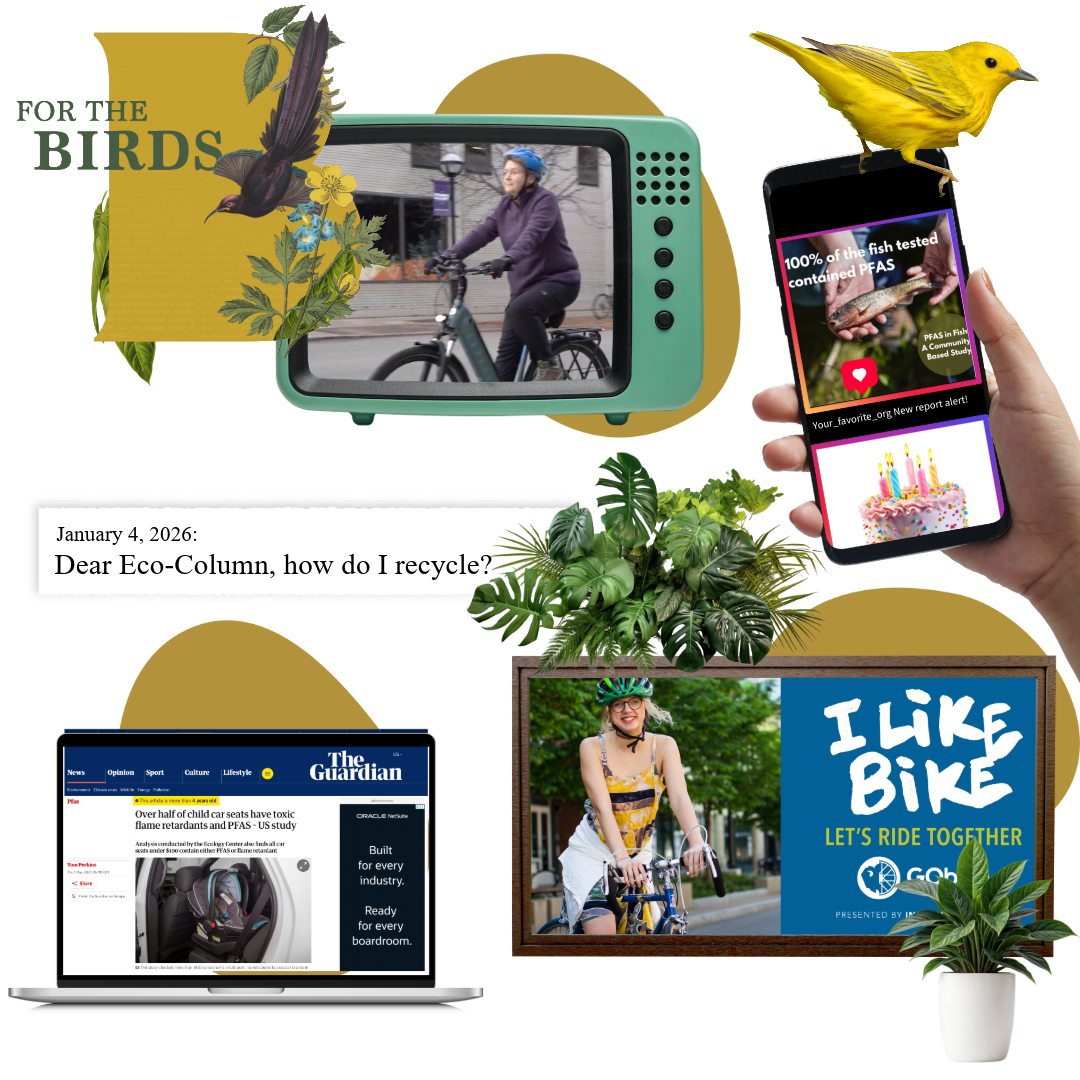
- A billboard campaign humanizing people on bikes, evolving from a 2015 campaign I led featuring local celebrities to 2016 imagery of everyday Buffalo cyclists in natural settings — chosen to reflect the diversity of riders and bike types across the community. (A celebrity billboard tweeted by a local band’s Twitter account alone drew 20,000+ impressions, far outpacing expectations.)
- A 52-week icon campaign — nine core icons paired with 52 unique bike safety and complete streets messages — published weekly on social media, designed to educate cyclists and motorists on the rules of the road and the benefits of complete streets
- An online, mobile-friendly bicycle infrastructure map for area cyclists, featuring safe routes and rides with amenities — multi-use pathways, fix-it stations, bike parking, restrooms, water fountains, and points of interest
Outcome
[Results achieved — metrics, impact, or client feedback]
WNY Plastic Pollution Reduction Advocacy
Problem
New York’s Packaging Reduction and Recycling Infrastructure Act (PRRIA) would cut problematic plastic packaging, ban toxic chemicals from packaging materials, and shift recycling costs from taxpayers to producers — with Western New York alone projected to save millions in avoided disposal costs. But bills like this don’t pass on policy merit alone; they need public pressure, local buy-in, and lawmakers who understand what’s at stake. Buffalo needed a coordinated push connecting the science, the economics, and the human impact of plastic pollution to the people who could actually move the bill.
What I Did
As a Beyond Plastics Buffalo volunteer organizer, I l contributed to a multi-front advocacy push for PRRIA, including:
- Drafting a sign-on letter of support to NYS lawmakers, coordinating endorsements from local and national organizations and businesses
- Testifying before Buffalo Common Council, successfully securing a Council resolution in support of PRRIA
- Attending two lobby days in Albany, speaking directly with NYS legislators to advocate for the bill’s passage
- Co-leading a public film screening on plastic pollution, including delivering a presentation on plastic pollution’s local and regional impact
- Writing a grant to fund and continue this advocacy work locally
Outcome
The campaign built visible, credible local pressure behind PRRIA — including a formal Buffalo Common Council resolution of support — while growing public understanding of plastic pollution’s health, environmental, and economic toll on Western New York. The work continues.
Communicating PFAS Risk in Michigan’s Waterways
Problem
A community-based study testing fish from Michigan’s Huron and Rouge rivers found PFAS — “forever chemicals” — in every single fish sampled, across 12 commonly-eaten species. The contamination levels were high enough to warrant limited-consumption advisories, but too low to trigger Michigan’s official “Do Not Eat” designation — a gap that left subsistence anglers and their families at risk without clear guidance. The data existed; the challenge was in communicating the risk to the anglers eating that fish and the policymakers who could act on it.
What I Did
I led communications and media outreach for the PFAS-in-fish community science report, including:
- Writing the press release announcing the study’s findings and their public health implications
- Developing a story angle to translate technical PFAS data into a clear, personal risk narrative for people who fish and eat from these rivers
- Leading media relations and outreach, securing multi-channel press pickup
- Building a communications toolkit to equip partner organizations with consistent messaging
- Developing social media content to extend the campaign’s reach beyond earned media
Outcome
The campaign translated a dense scientific study into a story that reached anglers, press, and policymakers — raising public awareness of PFAS contamination in Michigan waterways and spotlighting gaps in state fish consumption guidance.
 For the Birds!