
Since the recent launch of Farmer’s Pirates curbside residential compost pilot program, Scrap It! Curbside, the talk of the town in Buffalo has been about composting.
As a life-long composter, I am thrilled to hear the buzz. I grew up in an income-limited, waste-nothing household in rural New York with no curbside trash pick-up. We composted for the earth, ease, and necessity.
After helping my grandmother scramble eggs for breakfast, I would feed the worms, kept in a bin underneath the kitchen sink. I’d dig a small hole in the rich soil and drop the eggshells in, spotting a worm or two as I worked.
Lunch and dinner generated more food waste than the worms could handle, so we’d bring our scraps to the backyard compost pile, where the mighty microbes were responsible for the digestion process. We stirred in the banana peels and vegetable rinds with a mix of leaves, twigs, and fresh mulch.
Here in Buffalo, we have curbside trash pick-up, so why bother composting? Well, there are still a lot of good reasons! We Americans excel at consumption and waste production, and it has global consequences. Each year, we waste30 to 40 percent of our food supply. About 25% of this ends up in landfills or incinerators. Nearly half of our municipal trash is biodegradable that could be composted instead of buried or burned.
Food waste and other organic material will rot in a landfill – but without oxygen, our microbial workers employ anaerobic digestion, creating a highly potent climate change gas, methane, in the process.
The poor farting cows take a lot of heat, but they’re not only to blame – landfills are America’s third greatest source of methane, producing as much greenhouse gas as 42 coal-fired gas plants.
In addition to intensifying climate change, when food is sent to a landfill or burned, valuable nutrients are lost that our soils desperately need. Due to decades of over-applying pesticides and fertilizer and monoculture farm practices, much of our soil is nutrient-depleted. We can get those nutrients back by composting our food waste!
Even in your backyard, adding compost to the soil:
- Conserves water by increasing the soil’s water-holding capacity;
- Produces higher yields in your vegetable gardens;
- Reduces the need for chemical fertilizers and pesticides;
- Suppresses plant diseases and pests;
- Protects against erosion and flooding; and
- Filters pollution out of the soil and restores contaminated lands (it is Buffalo, after all).
Healthy soil stores carbon – three times more than plants and trees. In fact, recent research on carbon farming – using farm practices like composting, cover crops, and agroforestry – confirms healthy soil removes carbon from the air. As we teeter on the brink of climate catastrophe, effective carbon sequestration practices are vital in saving us from worst impacts of climate change. There’s a climate solution right under our feet!
So what is composting?
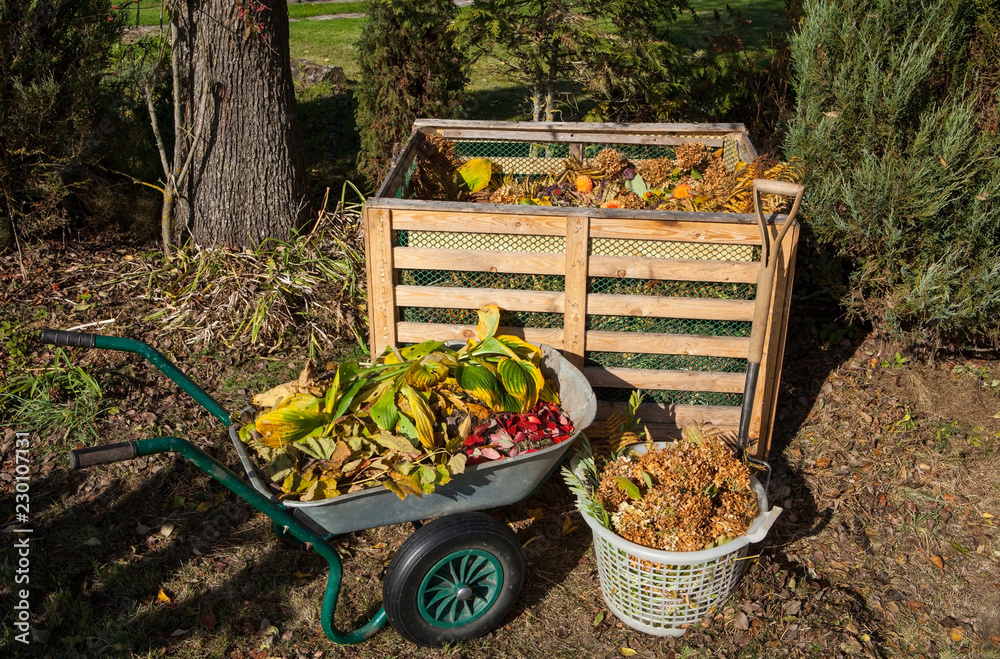
Composting is simply allowing microbes, water, and air to break down your organic material. You can compost in your backyard with a compost turner or container, or use a compost pick-up or drop-off service. Businesses, offices, and special events can compost, too.
You can compost nitrogen-rich “green” and carbon-rich “brown” materials. Greens include fruits, vegetables, food scraps, coffee and coffee filters, grass clippings, and eggshells. Browns include dry leaves, twigs and sticks, undyed paper, paper bags, and cardboard.
You do not want to compost meat or dairy products (there are exceptions), anything plastic, pet waste, or anything with a chemical application like food packaging, glossy paper, or painted wood.
Compostable packaging may be challenging to compost at home, especially in large quantities, and compost facilities may or may not accept these products. Please note bioplastics are not necessarily compostable.
Are you ready to compost?
Here are some tips to get started:
Keep it collected. Grandma wasn’t thrilled about worms in the kitchen (some worms refuse to be contained), but Grandpa’s worm bin was super useful – having an easy place to toss scraps while cooking is essential to successful composting. I leave my Farmer Pirates compost bucket outside my backdoor but keep a paper bag in the freezer to stow my compost short-term. This way, I don’t need to walk outside whenever I eat a peach or chop some veggies. You can also keep a small storage container or bucket with a lid by the sink, or in the fridge or freezer for easy disposal. The fridge or freezer controls the smell and keeps bugs away.
Keep it clean. The biggest problem in composting is contamination and the largest source is plastic. Make sure you keep contaminants out of your compost.
Plastics break down and become difficult to see, but they never go away. Microplastics are found everywhere in the world, from the Mariana Trench to the top of Mount Everest. Inside our bodies, microplastics are in our lungs, blood, and breast milk. Do not put plastic in compost. Check your fruit for stickers, keep your disposal coffee cups out, and only compost tea bags if you know with 100 percent certainty the bag is not made of plastic. Be vigilant! And join the plastic pollution fight if you are able.
Follow the rules. If you use a compost facility, they will give you a list of materials accepted in their compost. Follow this list! Compost operations vary, which results in differences in what can be accepted. For example, some haulers bring waste to an industrial composter. In that case, they will likely take meat and dairy products because their compost piles reach temperatures high enough to kill pathogens. Other operations may not be able to accept animal products, compostable food packaging, or compost bags.
When in doubt, toss it out. I recently volunteered as a “trash ambassador” for a large event with thousands of attendees and you wouldn’t believe how many Starbucks cups I picked out of the compost! While Starbucks is trying to develop a compostable cup, which is available in some places, most still have a plastic lining. Since we have no way of knowing what the cup is made of, it needs to go in the trash.
If you aren’t sure if something is compostable, send it to the bin. One of the most significant issues with composting is contamination. If you aren’t sure if your teabag is plastic or paper, or you suspect a dusting of industrial chemicals may be present on your paper bag, just toss it in the trash. No one wants microplastics or flame retardants in their vegetable gardens.
Get everyone involved. Memories of feeding my grandfather’s worms are some of my most cherished – perhaps from the glee one feels giving back to the earth, or perhaps because humans relax in response to the smell of soil. Either way, by teaching your kids to compost, you will instill habits that last a lifetime, and you can add a dozen or so science lessons in, too!
And if your friends or block club doesn’t yet compost, why not show them how you can fight climate change and grow the best garden on the block? Unless, of course, you want to keep the key ingredient to your super-sized tomatoes a secret.
If you want to compost in the City of Buffalo:
- Enroll in the Scrap It! Curbside program through Farmer Pirates, which provides free curbside compost pick-up to city residents;
- If you are not eligible for the free pilot program, you can pay a small fee ($17.50/month) for bi-monthly pick-up, also through Farmer Pirates; or
- Drop off your compost at one of the city’s four compost locations – Massachusetts Avenue Project Farmstand, Eugene V. Debs Hall, Dog Ears Bookstore, or the corner of Elmwood Avenue and St. James Place. The orange bins are always out.
You can also compost in your backyard. Erie County sells discounted backyard compost turners and bins each year, or you can make your own. You can also set up a worm bin in your basement or outside.
That’s it! Happy composting. On behalf of the birds, bees, worms, plant life, and humanity, thank you for taking this critical step towards keeping our earth healthy, happy, and full of nutrients.
 For the Birds!
Leave a comment